


Shade-providing trees are essential on daycare premises, allowing children to play outdoors while being protected from the sun. For the safety of young children, ensuring tree safety is a top priority. The health, stability, and structural integrity of trees on daycare grounds must be inspected regularly to identify potential hazards at an early stage.
The importance of these inspections was recently demonstrated by a tree showing signs of concern in the playground of a daycare center in Offenbach. A visual tree inspection identified an infestation with brittle cinder. The extent of the decay was subsequently assessed using the IML-RESI PowerDrill® and the PiCUS Sonic Tomograph.
Inhalt
Focus on Brittle Cinder
Brittle cinder is a wood-decaying fungus that, due to its inconspicuous appearance, is often detected only by experienced tree inspectors. It preferentially colonizes the lower trunk sections and root flares.
What makes brittle cinder particularly dangerous is that it decomposes the internal wood structure of the roots and trunk base, while the tree may still appear completely healthy and vigorous from the outside. As the decay can severely compromise the tree’s stability and structural integrity, an advanced infestation can cause the tree to suddenly fail and fall without any visible warning.
Measurements with the IML-RESI PowerDrill® and the PiCUS Sonic Tomograph
ESO Stadtservice GmbH is responsible for inspecting public trees in Offenbach. The company has been using the IML-RESI PowerDrill® for its work for many years. The device was also used on the affected tree at the daycare center and provided clear initial results.
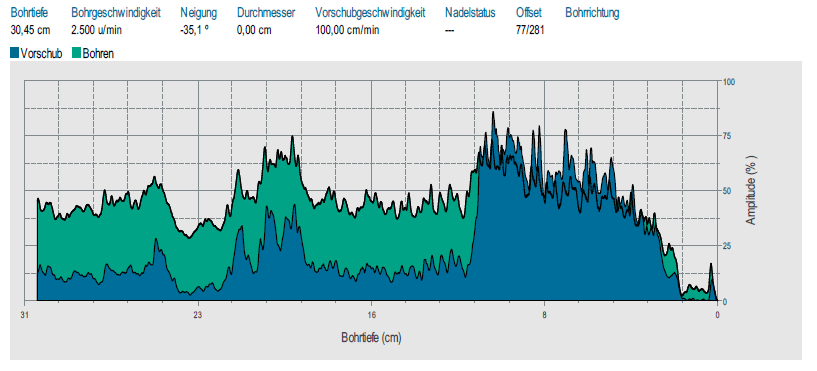
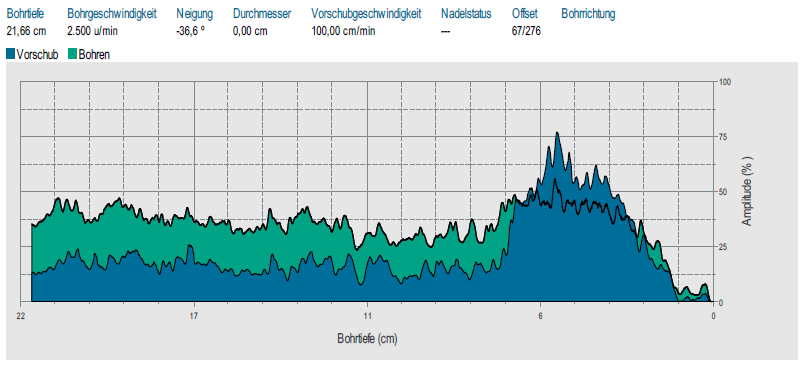
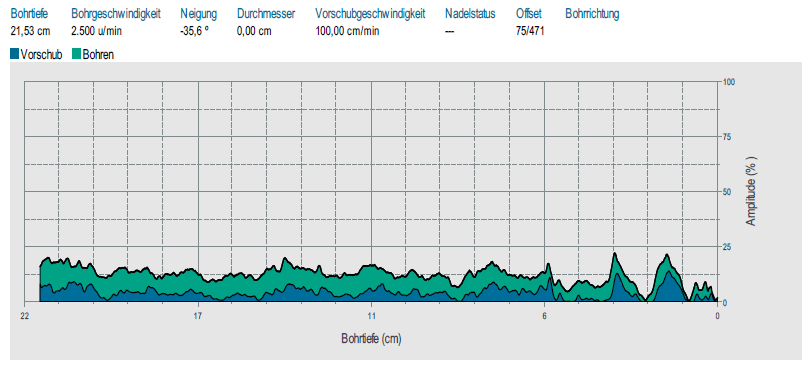
The measurement curves illustrate the challenge posed by brittle cinder. Unlike a cavity, the measurement curves do not show a sharp drop. Instead, irregularities, fluctuations, and decreases in amplitude can be observed. Nevertheless, the measurements immediately indicated the presence of decay within the tree.
To verify and confirm these findings, sonic tomography was carried out directly on the affected tree using the PiCUS Sonic Tomograph. This made it possible to obtain a complete image of the condition of the cross-section.
The tomogram directly confirmed the extent of the damage.
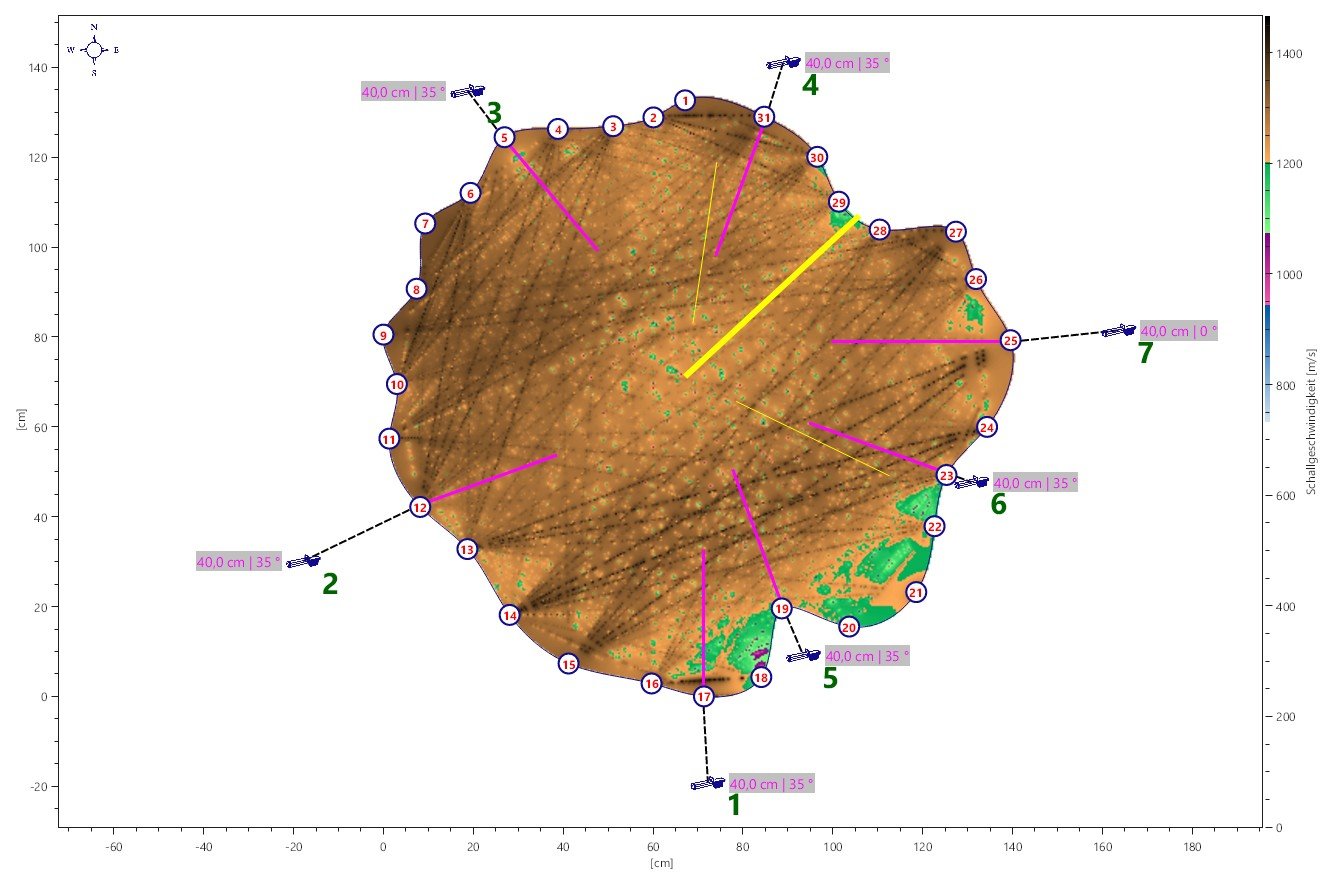
The tomogram already shows fungal infestation across almost the entire cross-section. This is indicated by the absence of dark brown areas, which represent high sound velocities. The results show that the fungus is not confined to a localized area. Instead, it has already begun decomposing the wood structure across the entire cross-section, which can severely compromise the tree’s stability and structural integrity.
Outcome and Decision
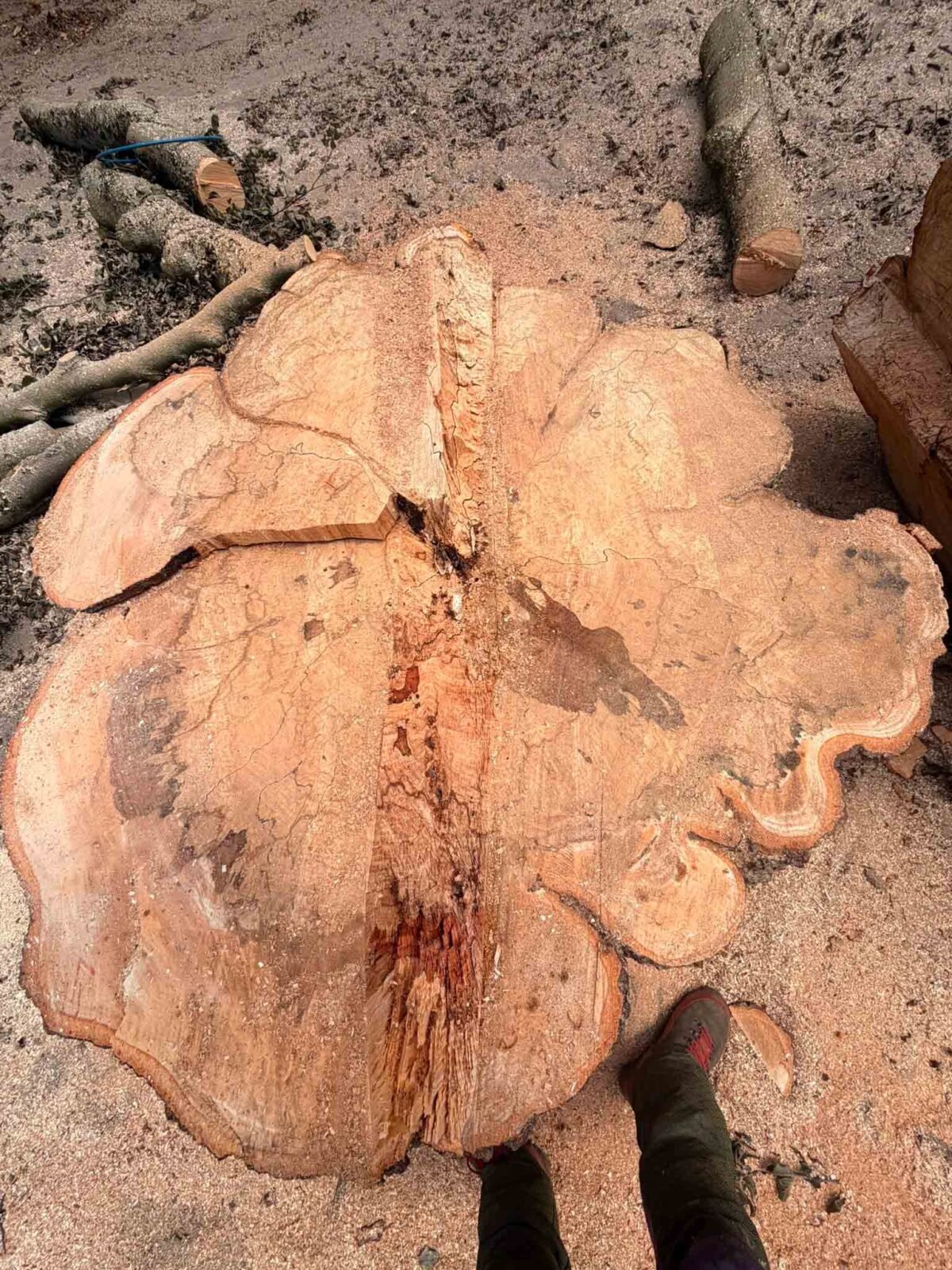
Based on the measurement results, it was subsequently decided that the tree posed a danger to the children and daycare staff. To protect everyone, the tree was felled within two weeks of the measurements, before the end of the school holidays and the start of the new daycare year.
Brittle cinder was also detected in another beech tree in the surrounding area, but at a less advanced stage. This tree will therefore be retained for the time being.
